 Skip to content
Indoor
Air Quality
Indoor air quality is a critically important part of HVAC. Unfortunately, it is often overlooked. Through poor system design or simple neglect, many homes end up chronically over-humidified, blowing around dust and allergens and suffering from stale indoor air.
Why Get One?
Many homes are built very tightly. Spray foam insulation, exterior Tyvek wraps, even sealed electrical wiring behind the drywall mean little air gets in from outside. Negligible infiltration keeps your heating and cooling bills low, but an ultra-tight home exacerbates other problems… like too much humidity. Tight homes also trap pollutants inside the home making the air seem stale and unhealthy.
ATC designs solutions to address excess humidity and indoor pollutants, keeping your home’s indoor air quality fresh and clean. Solutions can include:
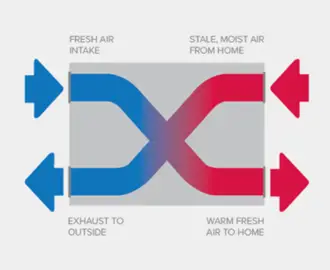
Energy Recovery Ventilator: ERVs exchange the inside air with outside air. As opposed to simply cutting a hole in the side of your house, an ERV recaptures a good part of the heat and humidity energy as it brings in fresh air. In the middle of the ERV, there is a membrane that transfers the heat and humidity in inside (and outgoing) air to the outside (and incoming air). Honeywell, Broan Nu-Tone, and Aprilaire all make good ERVs.
The Federal Energy Efficient Home Improvement Credit includes a 30% UNLIMITED tax credit for geothermal systems! With this credit in place, many geothermal installations cost no more than high end air sourced heat pumps!
ATC can solve each of these problems, though doing so often starts with overall system design. Appropriately sized heat pumps of furnaces with a well-designed duct system go a long way to providing the backbone for true indoor air quality. We also often employ the following:
Energy Recovery Ventilator: ERVs exchange the inside air with outside air. As opposed to simply cutting a hole in the side of your house, an ERV recaptures a good part of the heat and humidity energy as it brings in fresh air. In the middle of the ERV, there is a membrane that transfers the heat and humidity in inside (and outgoing) air to the outside (and incoming air). Honeywell, Broan Nu-Tone, and Aprilaire all make good ERVs.
Dehumidification: A whole-house dehumidifier can keep excess humidity from damaging your home. Small, portable units on wheels just don’t have the capacity to dehumidify an entire house – plus emptying the reservoir requires constant attention. A whole house unit can be much more efficient too.
Humidification: A whole house humidifier can keep dry winter air from irritating occupants. We offer bypass units and steam humidifiers.
Instead, at ATC we recommend 4” pleated filters from Aprilaire, Carrier, Trane, or Honeywell. These filters have MERV ratings of 11 – 13 and do a great job of removing allergens and other pollutants from the indoor air. Another advantage is longevity. The deep pleating allows them to last 6-months or more between changes.
Filtration: Whole house filtration can remove allergens and other indoor pollutants from your home. For most homes, ATC recommends 4” pleated filters for their ability to last a full 6-months and do a nice job removing pollutants. In most cases, it is a simple job to retrofit a conventional 1” filter system to accept a 4” filter.
What does “indoor air quality” (IAQ) mean and why does it matter?
Indoor air quality refers to the cleanliness and healthiness of the air inside your home — including levels of allergens, dust, humidity, odors, and pollutants. Poor IAQ can trigger allergies, respiratory issues, odors, and discomfort. Tight, well-insulated homes often trap moisture and contaminants, making ventilation, filtration, and proper HVAC design essential.
How can an Energy Recovery Ventilator (ERV) improve my home’s air quality?
An ERV continually exchanges stale indoor air with fresh outdoor air while capturing most of the heat (or cool air) and moisture for energy efficiency. This brings in fresh air, reduces indoor pollutants, controls humidity, prevents stale air buildup, and helps reduce allergens and VOCs — all without wasting energy.
Do I need more than basic HVAC filters to improve IAQ?
Yes. A standard thin flat filter may remove large particles, but higher-efficiency 4-inch pleated filters (with MERV 11–13) or whole-home filtration provide much better removal of dust, pollen, pet dander, and many airborne allergens. These filters also tend to last longer and help maintain consistent air flow when properly rated to the system.
What other indoor air quality solutions are worth considering?
Beyond filtered HVAC systems and ERVs, you can improve IAQ with whole-home dehumidifiers (to prevent excess moisture and mold), humidifiers (to prevent overly dry winter air), and air purifiers — especially if you or family members have allergies or respiratory sensitivity.
How often should I change air filters or perform HVAC maintenance to protect IAQ?
For pleated 4-inch filters, every 6 months is often sufficient. For thinner or standard filters, it’s usually best to replace them every 3 months. Regular HVAC maintenance ensures proper airflow, clean ducts, and effective filtration — which all contribute to better air quality and system performance.
Why might I still have stale air or humidity problems even with a tight, insulated house?
Tightly sealed homes reduce energy loss but also limit natural air exchange. Without mechanical ventilation (like an ERV) or proper humidity control, moisture can build up and pollutants will accumulate — leading to stale air, musty odors, and potential mold growth. Properly designed ventilation and filtration systems are key to solving these problems.
How do I know if I need a home IAQ assessment or upgrade?
If you notice persistent stale air, frequent allergy symptoms, humidity problems, musty odors, or uneven heating/cooling — that may signal your IAQ or HVAC design isn’t optimal. An assessment by a qualified HVAC professional (like ATC) can identify if you need upgraded filtration, ventilation, humidification/dehumidification, or ductwork adjustments.
Will upgrading my HVAC or ventilation system always improve air quality?
If the system is properly designed, sized, and maintained. Upgrades like high-efficiency filters, ERV ventilation, whole-home humidifiers/dehumidifiers, and regular maintenance can dramatically reduce pollutants, allergens, and humidity issues. Poorly sized or poorly maintained systems, however, may not deliver the expected benefits.