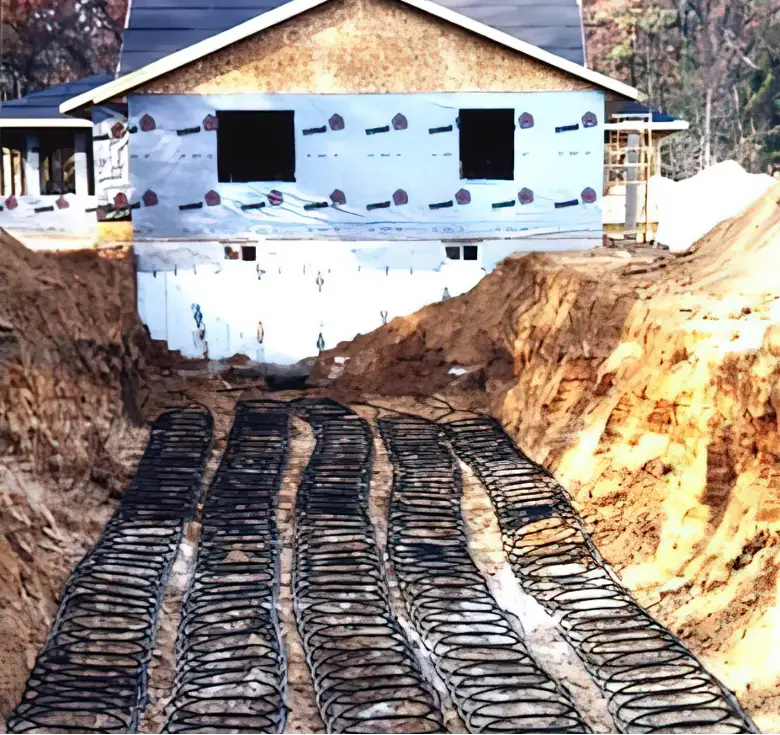
Today, we are going to talk about Geothermal systems. Geo systems are hot right now and there are lots of questions about how they work and why you should have one. The U.S. Federal government is highly supportive of geothermal systems now too with a 30% unlimited tax credit. For example, and using easy math, if you spent $100,000 on a complete geothermal system – you would get a $30,000 credit on your taxes!
But before we go any further, let’s look at what is a geothermal system. A geo system has three main components:
- A heat pump – this part efficiently changes the temperature of the fluid in the ground pipes
- Piping in the ground or lake – this is really just a heat sink to disperse the heat energy
- A distribution system – the most common distribution system is forced air, so a blower and ductwork
Besides the cool factor, there are three performance reasons why you would want a geothermal system.
- Efficiency: This is on everyone’s list and for good reason. Geothermal systems are 30-40% more efficient than even the highest-end air source heat pumps.
- Longevity: Geothermal systems simply last longer than air source heat pumps. A conventional heat pump may provide 15-years of service. The owner of a Geothermal system can expect 25 years or more on the inside equipment. Plus, much longer for the water loop.
- Aesthetics: Because a geothermal system’s heat transfer activity is underground (or in the lake), there is nothing outside, sitting beside your home to ruin the look. That means there is no heat pump running next to your deck or patio to disturb your BBQ!
Add in that tax credit and you can see why geothermal systems are so popular.
A question I’ve gotten recently is to ask how a geothermal system is so much more efficient? The best analogy I’ve come up with is that of a guy pushing a ball up a hill. The steeper the hill the harder the task. And when it comes to heat pumps – geo or otherwise – the hill is temperature. Or really, more accurately, temperature change.
In the wintertime, you may have a very cold outdoor temperature of say 5 degrees. Inside, you want 70 degrees. That is a 65-degree temperature change. And a conventional air source heat pump has to climb that really steep hill. For most units, it can’t even do that and instead just engages the emergency (electric) heat to produce enough heat to keep the home comfortable. In contrast, a geothermal system is starting with ground temperature (not outdoor air temperature). The ground temperature stays at a constant 55 degrees.
Going from 55 degrees to 75 degrees is pretty easy – it’s only a 20-degree temperature change. Think of a guy pushing a ball up a gentle slope instead of the air source unit’s steep hill.
In summer, your heat pump (or geo unit) is working to pull heat out of the home. The air source unit may have 95 degrees outside air temperature while you are calling for 75 degrees inside. A 20-degree temperature change. The geo unit is working with 55 degrees in the ground and also looking for 75 degrees inside. As the ground temperatures is lower than the desired indoor temperature, a geo system is actually rolling the ball downhill!
So there you have it. The best geothermal systems return efficiencies as high as 18 HSPF and 25 or better SEER. Those numbers are much better than air source heat pumps!